
Recently, the national final of the 2026 National Enterprise Competition Simulation Contest was held at North China University of Science and Technology. A team from the School of Management Engineering represented the university and won the National First Prize after fierce competition. The university was also awarded the “Outstanding Organization Award” by the organizing committee.
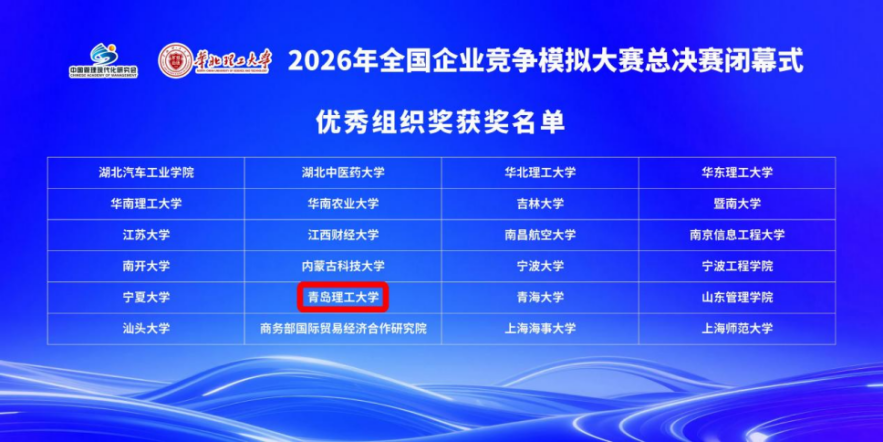
The Enterprise Competition Simulation Contest is an important business simulation competition with Chinese characteristics for university students. It is included in the catalogue of the National College Student Competition Analysis Report released by the China Association of Higher Education. Guided by the China Association of Management Modernization and the Economics and Management Group of the National Experimental Teaching Demonstration Center Joint Association, the contest is organized by the Decision Simulation Committee of the China Association of Management Modernization. This year’s contest featured four tracks: enterprise decision-making, enterprise operations, supply chain, and digital-intelligent sandbox simulation.
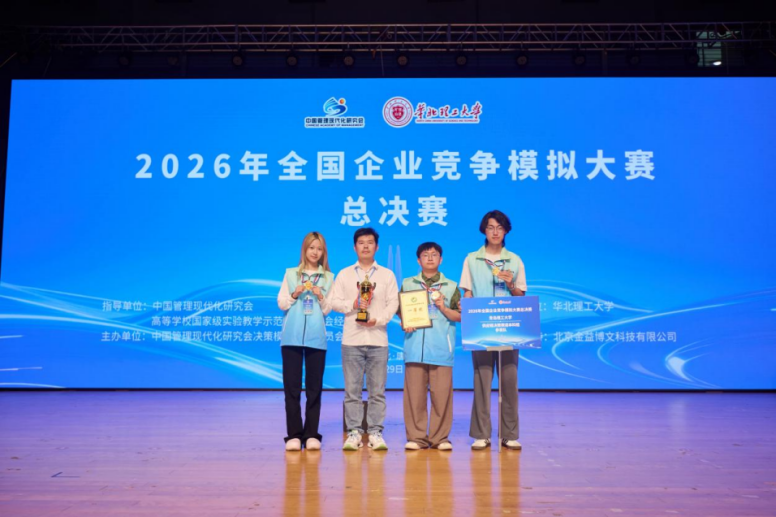
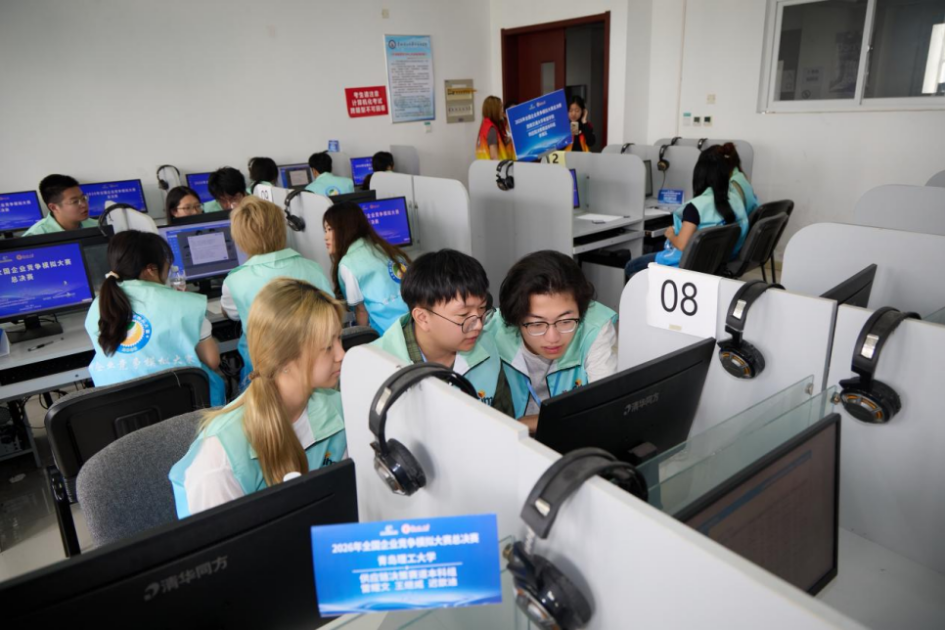
This year’s competition attracted more than 12,000 teams from across the country. Afterrounds of preliminary, second-round, semifinal and final selections, 382 outstanding teams from 275 universities advanced to the national final. Under the guidance of Liu Zhiguang and Cui Xinjiang, the team composed of Lei Yaowen, Wang Jiwei and Chi Xindi delivered an excellent performance and won the National First Prize in the supply chain track. Cui Xinjiang was named “Outstanding Instructor.” During the competition, the students calmly analyzed market trends, developed sound business strategies, and worked closely as a team, demonstrating solid theoretical knowledge, strong decision-making abilities, and an enterprising spirit.
Since the launch of the competition, the university has made careful arrangements and organized preparations in an orderly manner. In line with the features of the competition and students’ actual needs, the instructors developed a systematic and targeted training plan. Focusing on market trend analysis, business strategy adjustment, data model application, risk prevention and control, and teamwork, they carried out regular training, simulation exercises and post-competition reviews, providing timely guidance and helping the team optimize its strategies. All team members showed strong self-discipline and dedication, repeatedly refining their plans and tactics through intensive practice.
Moving forward, the university will continue to use discipline competitions as an important platform for talent cultivation, actively build diversified innovation platforms, and further broaden the dimensions of students’ comprehensive development. It will make continued efforts to enhance students’ innovation, critical thinking and practical abilities, and cultivate well-rounded, highly competent talent for the new era with strong political commitment, injecting youthful vitality into the university’s high-quality development.